Ebuzz News
The Caribbean’s ‘Hulk’ Transitions To Higher Realms. Blaxx Has Died.

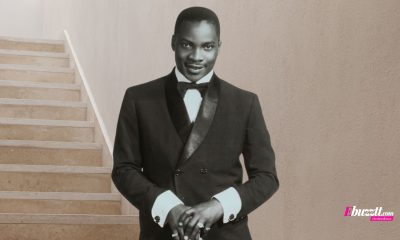
He had never won any of those much desired Carnival titles. No Road March, no Power Soca Monarch or Groovy Soca Monarch. He was always a major contender though, bringing songs like, ‘Breathess’ and ‘Tusty’, much to the joy and delight of revelers crowd side. He was ‘Hulk’, telling us all, “never let your problems get you down, stay focused and hold your ground.” Blaxx was the voice of Soca consciousness. Earlier today, after health struggles over the past two years and a subsequent Covid-19 diagnosis, Blaxx transitioned.
Fans and friends the world over have been expressing gratitude in the wake of his passing, many acknowledging Dexter ‘Blaxx’ Stewart’s immense contribution to the Carnival culture of not just Trinidad and Tobago and the Caribbean, but the world.
“Over 30 plus years of friendship! Tours and touching stages together! One of the most vocally apt, powerful and indistinguishable voices in the game…but beyond the music…one of the realest and most genuine. Up to yesterday I sent one of my favourite of your songs to a friend making jokes with her..sigh…was praying daily that you would pull through brother! The Creator had other plans that only the Creator knows,” said Barbados Soca artist, Rupee.

His manager, Giselle Gellineau-Penrose said Blaxx had expressed his exhaustion to her. “Dexter you said you was tired being sick, tired of everything. You told me you have done everything you wanted to do in life and more. That you have accomplished your work in the soca industry by mentoring the younger generation. You fought a good fight. My heart is broken but God is ready for you now to sing with the angels. I love you forever,” she wrote on social media.
Austin SuperBue Lyons, a fellow stalwart in the Soca and Calypso industry said, “This one is very sad for me.” His sentiments were echoed by countless other Soca and Calypso artistes who paid tribute to Stewart on social media this afternoon.

Blaxx grew up in Penal, Point Fortin and Siparia. He later moved to Morvant and considered that community his home. He got his first major Soca break in 2007 with a track penned by Nadia Batson. That song was called ‘Dutty.’ A man of very humble beginnings, he once told a newspaper reporter, “I was thankful for being poor. I wish poverty could motivate people like it motivated me.”
Today, as we celebrate the life and times of Dexter ‘Blaxx’ Stewart, Ebuzztt recalls his words in the face of societal decay. In an interview with Ebuzztt in 2020, he said, “We as artistes have a responsibility to the population. When we feel these derogatory music interferes with us, it’s worse. It interferes with the future generation- the nine- year- olds and the 7- year- olds.”






Ebuzz News
The Mighty Sparrow: “The Birdie Will Be Flying High.” Burt Marcellin Recalls The Calypso King’s Words.
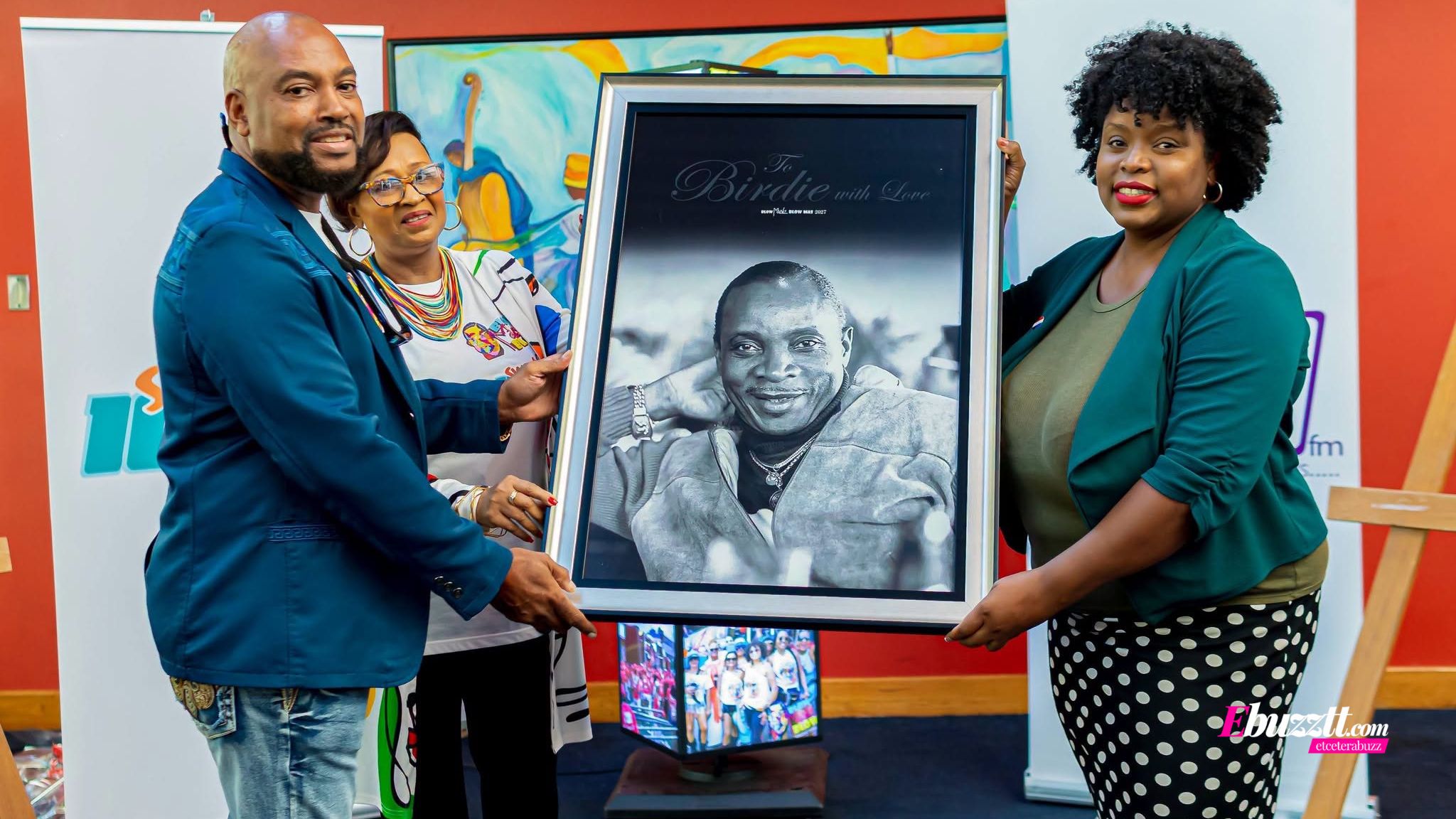
Prior to the transition of one of the Caribbean’s most celebrated artistes, one man had an interaction with him that he will forever remember. Burt Marcellin, founder of Brass 2 The World and Monday Mas band, Blow Mano Blow, experienced the greatness of the Mighty Sparrow – Slinger Francisco, in quite a special way, prior to his passing on September 27th, 2026.
Burt is the son of the legendary Trinidad and Tobago musician, Mano Marcellin – the man, who in the 60’s introduced the concept of electronic music accompaniment with live bands, on the road on Carnival Monday and Tuesday. The elder Marcellin passed away in 2016, however, his son, Burt continues to honor his father’s legacy, having re-introduced the live Brass band on the road prior to his father’s passing. “It bothered him that after all the work that had gone into getting electronic accompaniment to the Brass on the road, in 2015 there was no live music on the road,” explained Burt in an exclusive Ebuzztt interview.
After accepting an opportunity to deliver brass on the road alongside K2K Alliance in 2015, Blow Mano Blow was conceptualized. “Blow Mano Blow was created to honor my father’s legacy,” said Marcellin. The band was built on the premise of always honoring the greats and delivering a theme with that person in mind. In 2026, with his wife Dianne’s creative direction, Burt Marcellin agreed wholeheartedly to paying tribute to The Mighty Sparrow with the theme, ‘To Birdie With Love.’ Months later, Sparrow, spiritedly in conversation with Marcellin via telephone, would utter the words, “The Birdie Will Be Flying High,” in complete appreciation to the concept of honoring his legacy in 2027.
Looking Ahead to 2027

“Sparrow was very, very special. The songs he sang, I think any Trinidadian could find one to put themselves in,” said Marcellin. These are the said songs that stand at the foundation of the band’s 2027 presentation. From Congo Man, to Marajhin, Jean and Dinah, Margarita and Happy School Days, the spirit of The Mighty Sparrow will soar on Monday, February 8th in Port-of-Spain.
Marcellin, a true creative – musician and visual artist, says Blow Mano Blow is prepared to deliver something very special at the Queen’s Park Savannah on Carnival Monday. “The idea that we have is something that will bring people out to the Savannah on Carnival Monday, but we can’t do it by ourselves. We need the support of the powers that be, to make it happen,” said Marcellin. “All the Sparrow lovers are invited to spend the day with us on Carnival Monday. We have a very special Sparrow set, and this coming Carnival Monday will be one of the best. We start Carnival Monday with brunch and then we hit the road at 1pm,” he explained.
A private media launch to announce a partnership with Sweet 100FM, which took place back on August 24th at Queen’s Hall, saw The Mighty Sparrow’s daughter, Karen along with his daughter in music, Natasha Wilson, presented with portraits of the legendary artiste as tokens of the team’s appreciation. “When we spoke with Sparrow before the band launch, we told him the ideas for the band and he said, “I love it. I love it.” He also said the song, ‘Both ah Dem’ was one of his favorites after learning that KV Charles would be singing some of his songs at the band launch,” Marcellin revealed.
Saying Goodbye to a Legend with Honor.
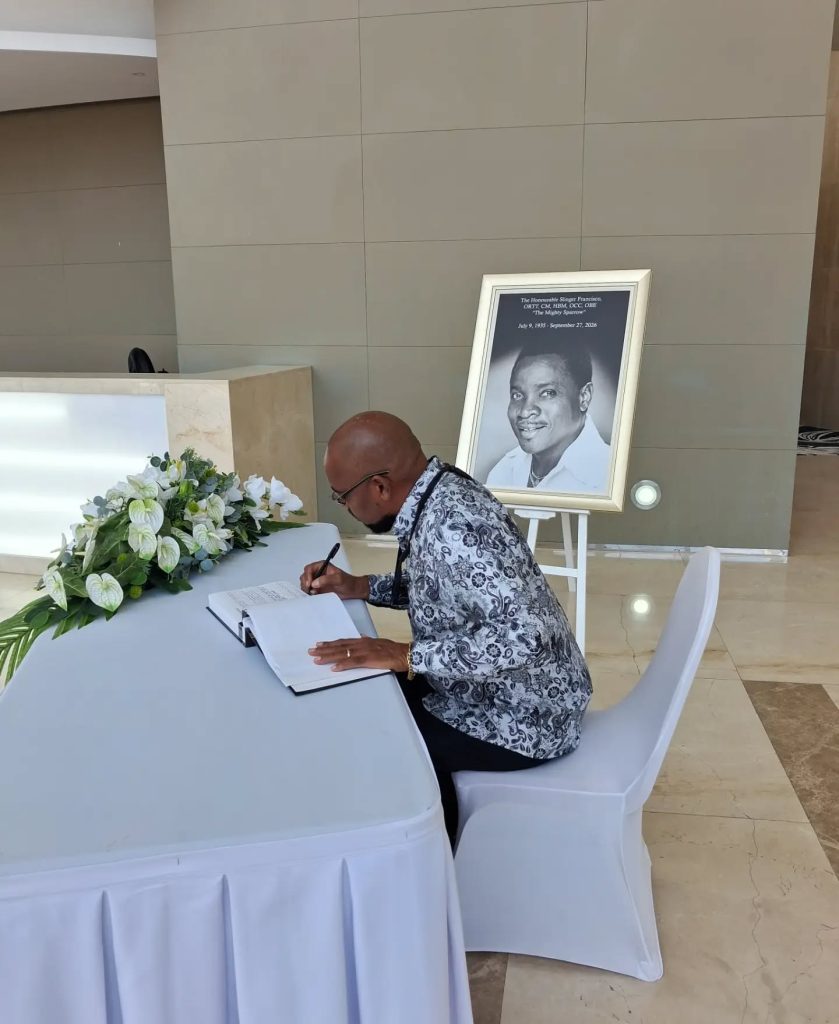
On Friday, October 16th, The Mighty Sparrow will be laid to rest. His state assisted funeral will begin with a procession from 10am from Independence Square in Port- of- Spain, moving along Frederick Street, before concluding at NAPA. The procession will include a National Farewell at Independence Square, a People’s and Cultural Farewell along Frederick Street, and a Ceremonial Farewell at NAPA. Burt Marcellin believes a lasting tribute to the Mighty Sparrow is necessary. “I was lucky to have seen Sparrow perform in 1996 for the first time live at a major event in Caribana – Sheraton. It was the biggest event in Caribana in those days and Sparrow opened the show. I have never seen anybody perform like that. He had the bacchanal vibe – a real performer, the way he commanded the crowd,” recalled Marcellin. With that memory fresh in his mind, Burt Marcellin says the youth of T&T stand to benefit immensely if programs are included in the education system that teach on his writing techniques, storytelling and melodies. I would also encourage consideration for his song, ‘Education’ to be played in all schools because it is a lesson for everyone. The value in those words should be used. The value lies in the staying power of his music. The fact that the melodies of Sparrow’s music can be hummed years after, is powerful,” emphasized Marcellin.
In September, when Burt Marcellin left Trinidad and Tobago on a brief trip to Miami, he took along with him, the portrait of the Mighty Sparrow that was initially presented to Natasha Wilson. Its size was a factor that affected her traveling to the US with it. “While en route to the post office with the portrait, in Miami, I received the call that he had passed away,” he recalled sadly. That was a moment that will undoubtedly stay with him.
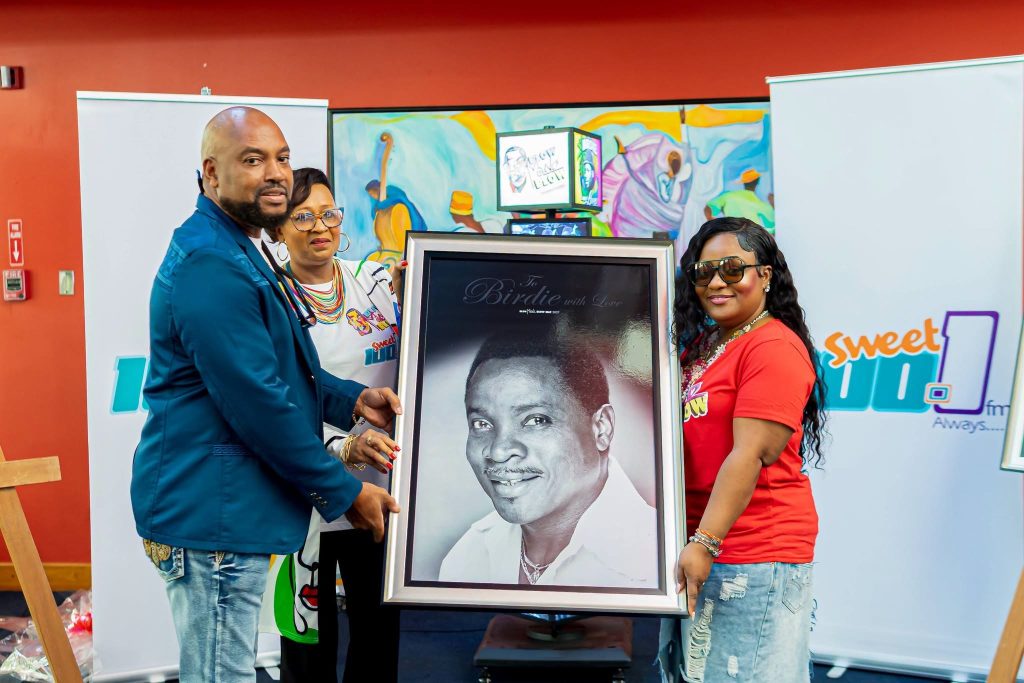
In the words of Burt Marcellin- the son of the musical innovator, Mano Marcellin, “The Birdie was magnetic.” “He was very crafty with his words. He was a calypsonian and a writer, but he was also like an actor – he could communicate in all kinds of environments. His delivery, his execution – he was magnetic.”
The tributes to the Mighty Sparrow have not slowed. From across the region and internationally, the appreciation felt and the love expressed, has been deserving.”Ours was the last creative project that The Mighty Sparrow was involved in,” Marcellin said, putting into clear perspective the timing of everything and the immense privilege he had, to have engaged so happily with the Birdie, before he flew away.
Ebuzz News
French Ambassador, Guillaume Pierre to Experience His First Ever Dîner en Blanc in Port-of-Spain, Trinidad.
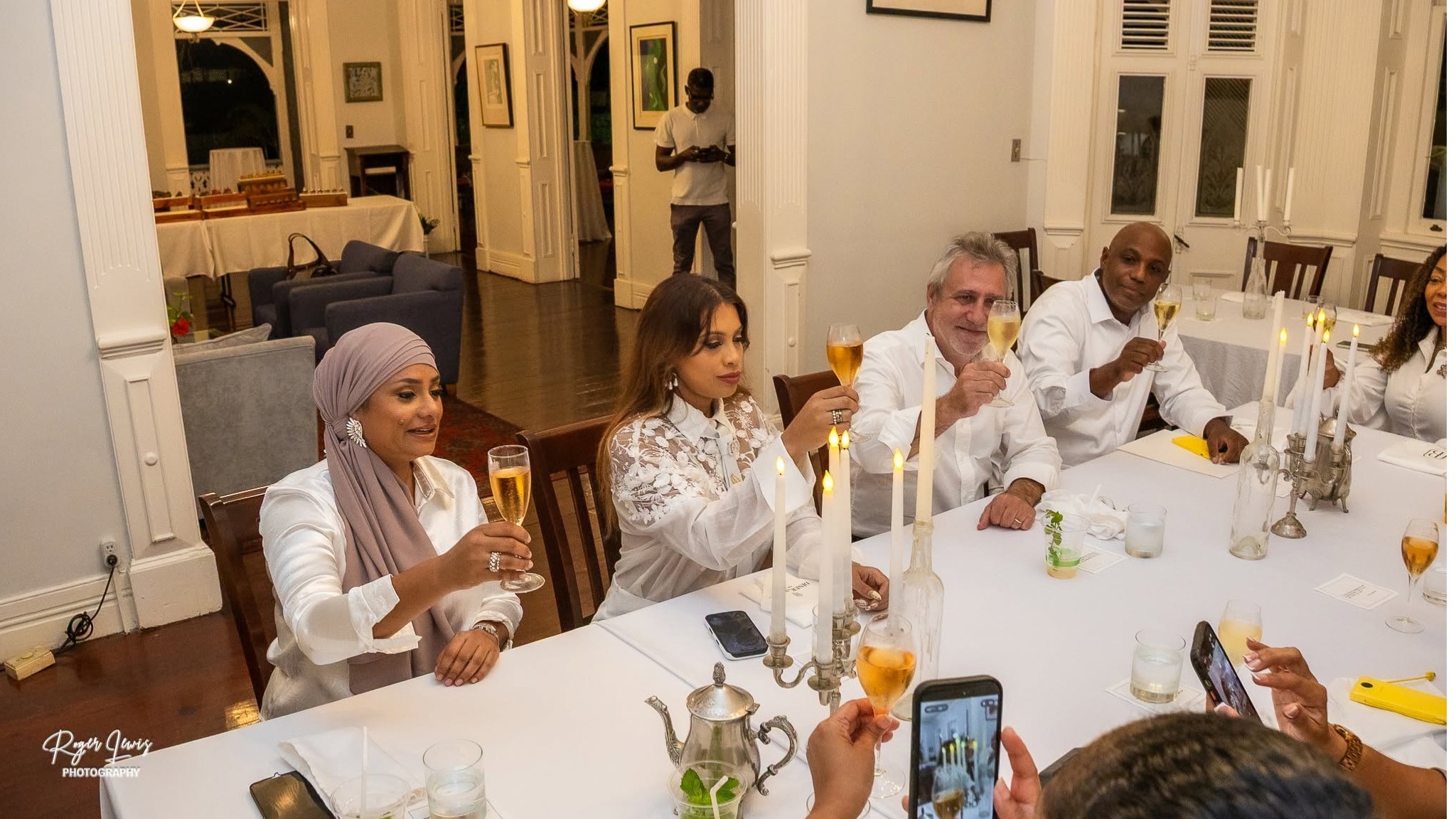
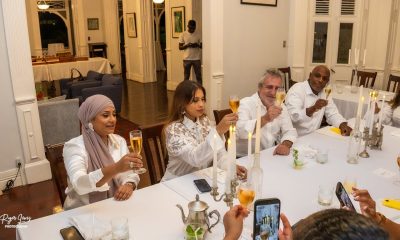
“We’re trying to keep everything as tight lipped as possible.” The words of Meagan Monsegue, Franchise holder for Dîner en Blanc, Port-of-Spain. On Monday, October 5th, the media got a sneak peak into what’s to come for this year’s exclusive experience, which takes place on November 14th, at a secret location.
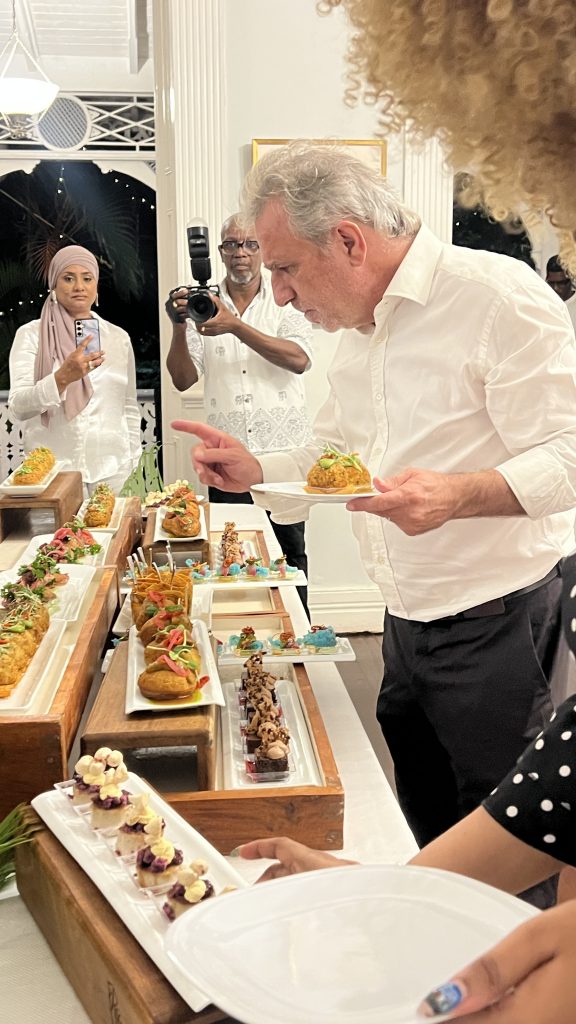
Dîner en Blanc was founded in Paris in 1988. It started off as a gathering of friends in the Bois de Boulogne, dressed in chic white attire and sharing good food, wine and conversation. At the residence of the French Ambassador to Port of Spain, Guillaume Pierre, on Monday, he shared, “It’s very natural. First we are talking about gastronomy. Where there is good food, there is always a Frenchman there, close and interested and specifically, gastronomy through this beautiful project called Dîner en Blanc, which basically calls on people to get together to share a nice moment of food, and friendship around a beautiful table. It’s very French but I think it’s also very Trinidadian to get together and share good moments.”
Ambassador Pierre went on to say he is excited to be a part of the event in November. He will be this year’s Guest of Honor. “I’m looking forward to discovering beautiful people, have good food and spend a good time.”
This is the sixth staging of Dîner en Blanc in Trinidad and Tobago. Guests will begin arriving at the secret location from 4pm in mandatory chic, all white attire. As a French inspired celebration, Dîner en Blanc serves only wine and champagne. This event is curated to ensure maximum luxury and grandeur. “Our theme is One Soiée Parisienne – La Belle Époque,” said Monsegue. She explained that La Belle Époque was an era associated with artistic expression, cultural flourishing, innovation, elegance and optimism. “It also reflects the French philosophy of Art le Vivre – the art of living well.”
Monsegue and co host, Nigel Roach say they are not attempting to recreate Paris in Trinidad. “We are inviting Paris and Port-of- Spain in conversation, bringing French elegance and tradition, together with our own warmth, creativity, rhythm, hospitality and cultural richness,” said Monsegue. She noted that the French connection to T&T is familiar. “It exists within our history, language, place names, food and cultural identity. Our interpretation will be expressed through design, fashion, music, entertainment, art, hospitality and food, creating an evening that feels transportive, contemporary and unmistakably Trinidadian.”

Dîner en Blanc as a brand, is hosted around the world. It is a massive global phenomenon hosted in nearly 120 cities across 40 countries. In the US, it has been hosted in cites like New York, Philadelphia – which is historically the largest in the US, Atlanta, Los Angeles, Chicago, Houston and Miami, and in Canada, the event has been staged in Montreal, Toronto, Calgary, and Edmundston. France, New Zealand, Australia, Haiti, Mexico and of course, Trinidad and Tobago have all hosted Dîner en Blanc. “You do not know where you’re going. The location remains a secret until the final moment- which, in Trinidad, where everybody knows somebody, who knows somebody – is no small achievement. Then comes the reveal. Suddenly, a familiar part of the city becomes something completely unexpected. Beautiful rows of white tables begin to take shape. Glasses are raised. Conversations begin, music fills the space and an entire gathering dressed in white becomes part of one extraordinary visually extraordinary experience.That is Dîner en Blanc,” explained Monsegue.
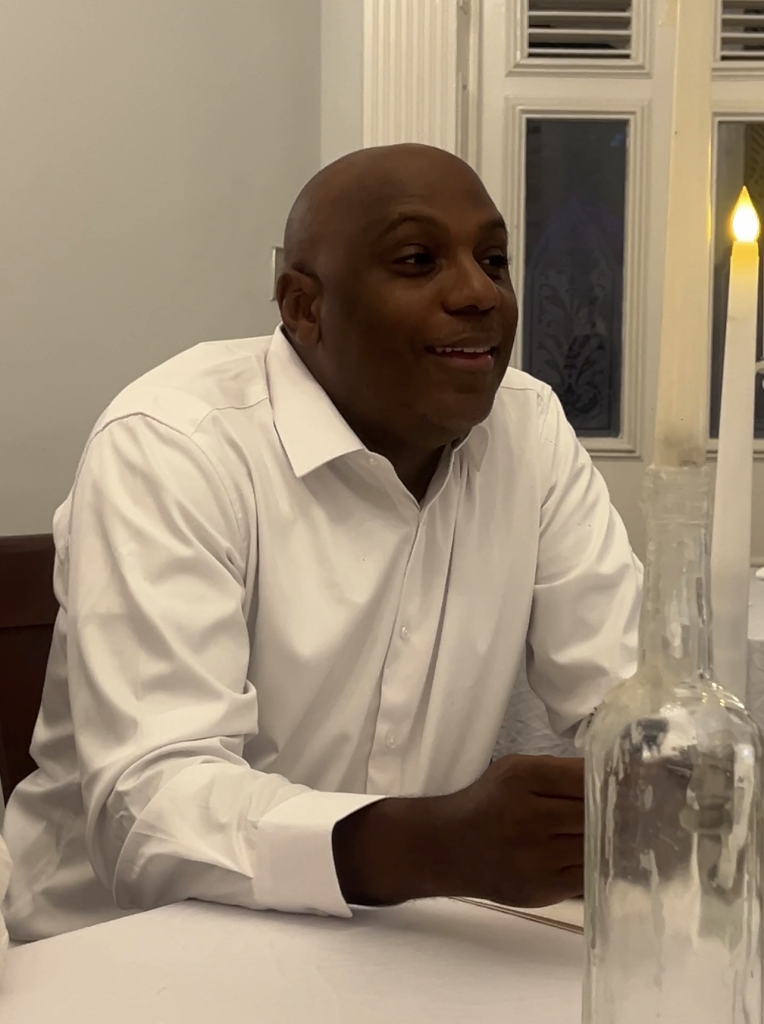
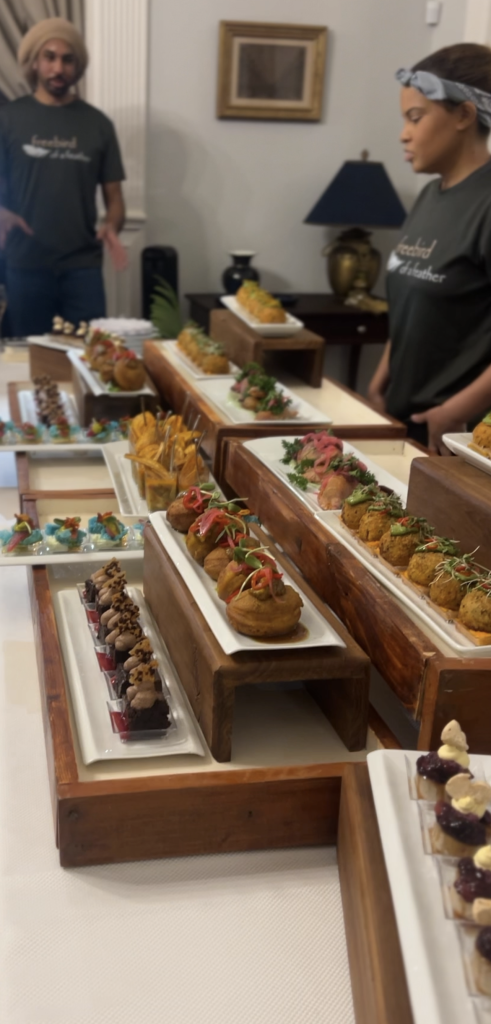
This year, Roach and Monsegue have partnered with Freebird Restaurant to deliver on sumptuous, Paris/ Trinbagonian fused cuisine that guests will enjoy on November 14th. Freeboard Restaurant, which is located in Point -A -Pierre, is run by Rhenard Callender and his sister, Le Cordon Bleu-trained executive chef, Rhe-Anne Callender. On Monday, Rhenard told the media said they are very pleased to be the catering partner for Dîner en Blanc. “We always believe that with food – for us, it’s about making really great food, for great people and to make people happy. We’re very excited about Dîner en Blanc and we’re looking forward to the event.”
Nigel Roach said the local franchise is guided by the International body when it comes to deciding on the most appropriate venue. “It has to be a location that is historically aligned with Trinidad and Tobago. We run that by the international body and then we go from there,” he said. Roach also said certain facilities are mandatory. “Proximity for parking and that sort of thing – those are the things that we must ensure of.” Meanwhile, French Ambassador, Guillaume Pierre says the event being staged in Trinidad and Tobago will be his first. “I know about Dîner en Blanc, I did not personally experience it but I know about it so I saw it several times and this year will be my first Dîner en Blanc – sitting at the table, so I am very, very excited with this idea. I know it will be a beautiful event. I also know that the food will be very good. I saw samples of the menus and it’s extremely interesting and you want to try. Basically, beauty, the art of the table, which is something that we are very attached to, and also, the taste- I am really looking forward to this experience in Port- of- Spain.”
For more on Dîner en Blanc, be sure to follow their social media pages.