
Caribbean Buzz
Archived: Destra’s Adhering to Docs’ Orders. Performs to Sold Out Crowd In Guyana.

Destra’s been given the permission of her doctors to perform as she has been, post surgery to her ankle. The Queen of Bacchanal has endured quite an ordeal in the past couple weeks but has proven resilient, hitting events in Baltimore and Guyana, since the incident occurred.

Destra performs in Guyana with the aid of a medical scooter.
Last week Wednesday, Garcia’s very own Festival of Bacchanal (FOB) took place at the Guyana National Park in Guyana. We understand a crowd in excess of 10,000 gathered to see Destra in all her glory- one foot and all. The lineup included Ravi B, Lyrikal, Farmer Nappy, Alison Hinds and Nadia Batson, S Carter and Bubbles among others. Destra says the event will take place annually in Guyana.

Nadia Batson and Alison Hinds
While many have voiced concern over Garcia’s quick return to the stage, her team is today assuring that the “Lucy” singer is adhering to her doctors’ orders. Her stitches have been removed, EBUZZTT understands, however she has been ordered to wear the Stress Fracture Air boot foot cast for another month to 6 weeks. When this comes off, Destra will begin therapy for walking and jumping on the injured foot. Destra’s been spotted performing with the aid of her crutches as well as a medical scooter- which actually looks pretty cool, we think!

T&T sensations, S Carter and Bubbles were a part of the event.
What’s next for QOB? We’ll just have to wait and see. Her daughter Xaiya heads back to school in a couple weeks and because we know this singer’s no joke mom, we have the distinct feeling that she’ll be focused on mommy duties for the next couple weeks.






Caribbean Buzz
The International Soca Monarch Will Return in 2027. Trinidad and Tobago Takes on the World. Wadicks Weighs In.

The ground has been calling for it – the return of the International Soca Monarch competition in Trinidad and Tobago. Now there’s news that the the competition will return in Carnival 2027 under the theme, Trinidad and Tobago vs The World.

One artiste, true to the authenticity of the culture, says it’s great news. Ebuzztt caught up with Wadicks earlier on Friday, just after the news broke. “This is something very good for artistes to test themselves – to see how best they are in representing the country when it comes to Soca music. It’s good for people to gauge themselves against their cohorts and it’s been a while since artistes have been able to really do that,” he said.
The competition’s official date is yet to be revealed, however if tradition is marinated, it will be held on Friday, February 5th. Scorch Limited and Scorch Events will produce the show. “For 2027, the competition returns with a bold, international dimension, placing Trinidad and Tobago’s Soca talent against artistes from around the world in a celebration of the genre’s growing global reach,” said a media statement issued. Details surrounding venue and participation requirements will be forthcoming.
For Wadicks and many other Soca artistes who occupy the space, the music delivered ahead of the competition is of dire importance. “I will jump in once the people gravitate to the music. The people must not be wondering what song this artiste is singing when they hit the stage in the competition. You don’t want to enter with a song the people don’t know,” he emphasized.
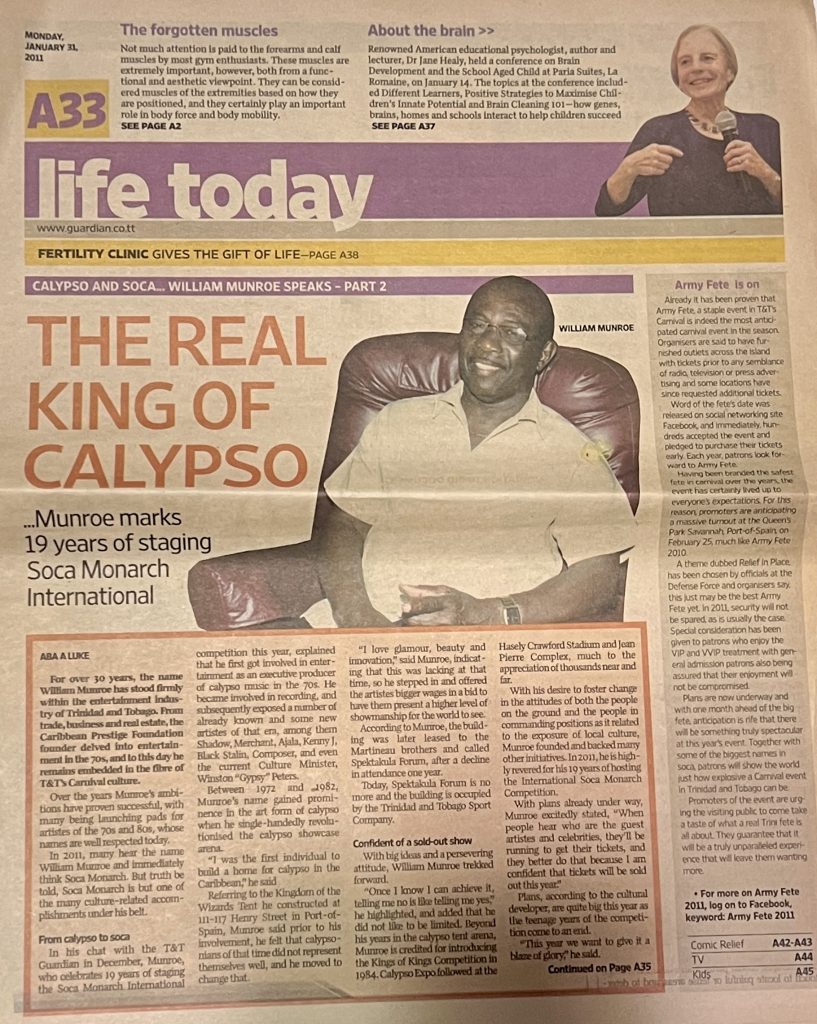
In the early years of the international Soca Monarch competition, under the stewardship of Mr. William Munroe, the International Soca Monarch was a monument in Carnival. Radio stations were heavily engaged and money spent on major advertising campaigns that saw emerging and seasoned artistes interviewed and their music placed on intentional rotation as a result of paid advertising. Whether this approach will be taken, as the effort to re-establish the solidity of Trinidad and Tobago in this area gets underway, is left to be seen. “No matter what, it starts with the people. Once the people accept the event and come out to enjoy it… but the marketing of the event is very important too. It’s a huge undertaking and if Scorch can get the people who come to their events and all the other people who love the culture, that would be fantastic to get T&T back to where it once was when it comes to the ISM,” said Wadicks. He has one song already bubbling ahead of Carnival 2027 and plans to release a second next week. “I have ‘Thickerz’ out already and I’m releasing a rum tune next week,” said the artiste cheerfully. He’s never in a bad mood.

With Grenada’s Soca Monarch now leading as the poster child of what Soca Monarch should look and feel like, Wadicks says he thinks the Spice Isle does a great job of showing the world just what true enjoyment of the music looks like. “They have no fashion statement – Grenada has no respect for clothes as compared to Trinidad where it’s more about fashion than enjoyment. In Grenada you could come out in any colour and after the party, patrons leaving dirty and sweaty, having had a time,” he said with a laugh.
Prize monies a major factor when it comes to competitions in Trinidad and Tobago, Wadicks says he doesn’t believe this should be the defining factor in any artiste’s decision to enter the competition. “The Soca Monarch brings out the best in an artiste when it comes to interacting with the people and getting the people to accept the challenge of a command. Artistes have to be able to move the crowd ; Besides being strong vocally, their ability to command the crowd must be on point,” he highlighted, adding, “We as the representatives of the culture should be pushing to bring back the Soca Monarch to where it was, but of course, not everybody will think like me.”

On the tempo of the Soca that’s required for big flag crews and real mayhem to return to big venues in T&T, Wadicks agrees that the sweetness that’s currently trending must subside. “Once the tempo starts to escalate things will get better. ‘De t’ing too sweet, especially for a short season,” he said frankly.
The Scorch team at the helm of the 2027 production says this production will have “no backroom and no bacchanal,” with an expert panel of music industry experts, cultural commentators and soca veterans scoring creativity, lyrics, stage presence, overall impact and a specially introduced aspect – the Sparrow Tribute. “The Mighty Sparrow belonged to both sides of this battle, so every finalist – home side and away side must pay tribute to the Calypso King of the World somewhere in their Fantastic Friday presentation,” explains an accompanying ISM27 deck issued to the media.
The word is out and the people have gotten exactly what they’ve been asking for. What’s left to see now is just who supports with cultural passion and pride at the forefront, and who chooses not to.
Caribbean Buzz
A Caribbean Icon Has Passed. The Mighty Sparrow Leaves Behind a Mighty Legacy. Machel, Shurwayne Reflect.

On the heels of his passing, the Caribbean community immediately drew for the memories of his heyday, but for those who knew him best, moments shared intimately with The Mighty Sparrow through musical interaction and opportunities presented, will continue to be a solemn reminder of the human being that he was.
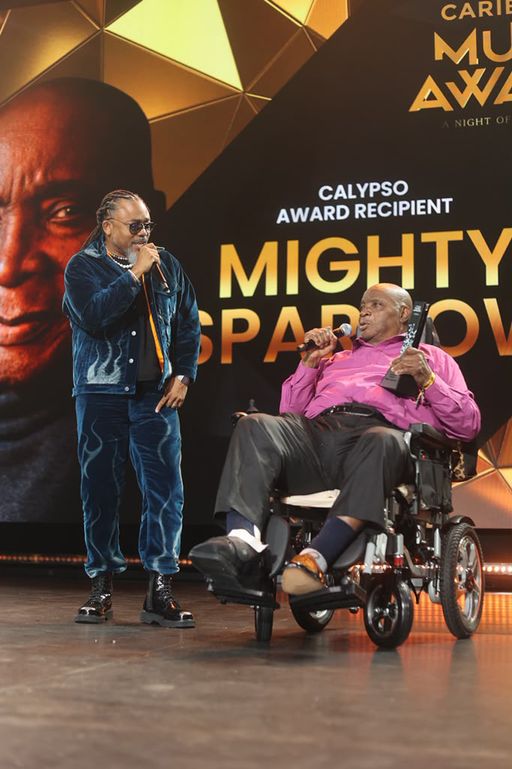
Soca King, Machel Montano recalls the opportunities given to him by the legendary entertainer. Sparrow’s timeless hits will live on and for Machel and many other artistes, his death at the age of 91, is a very real reminder of life’s impermanence. “I am flooded with emotions of every kind but most of all, I am filled with joyful memories of moments I’ve shared, lessons I’ve learnt, and music that shaped my very being,” said Montano. In 2008, the pair had collaborated to re-create Sparrow’s classic hit, ‘Congo Man.’ It was certainly a collaboration that will live in Machel’s heart forever.
More than seven decades of service to the culture of Trinidad and Tobago, The Mighty Sparrow’s legacy includes honors received from the country he was adopted by from a very young age. He had been awarded the Hummingbird Medal Silver in 1969, the Chaconia Medal Gold in 1993 and the Order of the Republic of Trinidad and Tobago in 2014, for his inimitable contribution to one of Trinidad and Tobago’s most enduring musical art forms, Calypso.

Shurwayne Winchester, in paying tribute to the icon, said, “In every lifetime, your presence would be needed, your music would be essential, your wit and personality required, because you, Mighty, Mighty Sparrow, were a gift to us all.” Shurwayne was one of the last artistes to collaborate with the legendary Calypsonian. The song is called, “My Island Girl,” released in 2023.
Mentored and loved by the Mighty Sparrow throughout her career, Natasha Wilson shared that her heart is saddened and announced that he had taken his last breath at 2:22pm on September 27th. “Dr. Slinger Francisco, the Calypso King of the World has passed,” she said in a Facebook live video. She asked for time on behalf of the family, to process the death of the man many considered the greatest Calypsonian who ever lived.
The Mighty Sparrow was born in Grand Roy, Grenada in 1935. His family migrated to Trinidad and Tobago less than two years later. In 1956, his career started with the hit single, ‘Jean and Dinah.’ It may have been his most famous song, but it would be only one of many, many incredibly well-constructed Calypso singles. Kees Dieffenthaller, in paying tribute, said The Mighty Sparrow was “the blueprint.” Internationally acclaimed songwriter and vocalist, Angela Hunte also shared, “My Sundays will always be filled with your voice in my house.”

From Barbados to Jamaica, his birthplace, Grenada, Guyana, the United States, the UK and at home in Trinidad and Tobago, the loss of Slinger Francisco – The Mighty Sparrow, is felt. Guyana’s President, Irfan Ali said, “He brought recognition to our Caribbean civilization. His melodies and lyrics sailed far beyond the region’s shores,” adding, “Sparrow lifted calypso from mere entertainment into an art form.” The Honorable, Mia Mottley also shared sentiments of deep appreciation and adoration for the Birdie, as he was fondly called, writing, “Calypso gave the ordinary Calypsonian a voice. Sparrow carried it to the world with incomparable genius. Born in Grenada and raised in Trinidad, he belonged to all of us.” She called on Caribbean adults to, “let our children hear him. Let them know that this brilliance came from among us.”
-

 Ebuzz News3 days ago
The Mighty Sparrow: “The Birdie Will Be Flying High.” Burt Marcellin Recalls The Calypso King’s Words.
-

 Ebuzz News1 week ago
French Ambassador, Guillaume Pierre to Experience His First Ever Dîner en Blanc in Port-of-Spain, Trinidad.
-

 Ebuzz News2 days ago
T&T’s Got Theatre and It’s Good! Best Little WhoreHouse in Guapo, Sensational.