Around the World
Caribbean Diaspora Leaders to Inspire Change at Disruptive Leadership Conference in Miami.

A CHAT WITH JUDY MCCUTCHEON

1. What inspired you to create the Disruptive Leadership Conference?
I have a deep connection to the Caribbean and a strong desire to see leadership in our organizations improve. As a management consultant, I’ve worked with many companies across the region, and one thing that stands out is the gaps in leadership and how employees are valued. I’ve always believed that better people make better organizations, and that belief led me to think about how I could contribute in a meaningful way to addressing this challenge.
I’ve seen firsthand that we have incredible leaders within our communities—people who lead with empathy, vulnerability, and an ability to inspire their teams to do their best work. These are leaders who excel at communication and building a sense of purpose within their organizations.
I began wondering, what if we could bring those leaders together in one space and create an opportunity for others to learn from them? I shared the idea with a few of these leaders, and their enthusiasm was immediate. That’s how the Disruptive Leadership Conference came to life—a space for leaders to share, learn, and grow together for the betterment of our organizations and our region.
2. What sets the Disruptive Leadership Conference apart from other leadership events?
What sets this conference apart is its focus on real-world experience rather than theory. Our speakers aren’t just talking about leadership—they’re actively living it. They understand what it means to navigate failure in the workplace and in business, and they bring those hard-earned lessons directly to the attendees.
Participants consistently share how much they value the immediate, actionable insights they gain, things they can apply the moment they return to work. It’s also a uniquely Caribbean experience—leaders from our region speaking directly to other leaders who truly understand the complexities and nuances of our context. This shared perspective creates a level of relevance and connection that’s hard to find elsewhere.
3. Why did you choose Miami as the location for the conference?
We’ve previously hosted this conference in Grenada and Trinidad, but their southern location made travel a bit of an adventure for many participants. That got us thinking—why not choose a place that’s not only more accessible but also a vibrant meeting point for the Caribbean? Miami naturally stood out as the perfect choice, offering convenience without compromising on energy or excitement.
Beyond accessibility, Miami offers a dynamic and engaging setting. Its lively nightlife and world-class shopping make it an ideal location for participants to blend work with leisure. We wanted attendees to have an opportunity to not only immerse themselves in the learning experience but also enjoy everything Miami has to offer, making it a perfect balance of productivity and fun.
4. Can you share some highlights attendees can expect at the conference?
Participants of this year’s Disruptive Leadership Conference can look forward to a range of impactful and engaging highlights designed to provide both actionable insights and meaningful connections.
One key highlight is the powerful lineup of keynote speakers—Caribbean leaders who bring real-world experience and a deep understanding of the unique challenges and opportunities within the region. These are individuals who don’t just talk about leadership; they live it every day in their roles.
The interactive workshops are another standout feature. These sessions are designed to provide practical tools and strategies that participants can implement immediately in their organizations. Attendees often leave these workshops with fresh ideas and solutions that address the real-world issues they face.
The conference also emphasizes networking opportunities. It’s a space where leaders can connect, share experiences, and build relationships that extend far beyond the event itself. For many, this aspect of the conference is invaluable as it fosters a sense of community among Caribbean professionals.
Finally, the conference doesn’t shy away from addressing the future. Sessions on technology, AI, and workplace trends ensure that attendees are equipped to lead in an ever-changing landscape, with a focus on sustainability, inclusion, and innovation.
All of this, combined with the vibrant atmosphere of Miami, makes the conference an experience that is as enriching as it is transformative.
5. How do you define disruptive leadership, and why is it critical today?
Disruptive leadership is about challenging the status quo and rethinking traditional approaches to leadership to pave the way for what leadership needs to be in the future. The old “command and control” methods no longer align with the demands of today’s dynamic and evolving environment. It’s about identifying what no longer serves us, breaking it down, and building systems that are better suited for current and future challenges.
As one of our speakers put it, “Even if something is working, take it apart to see if it could work better.” This mindset of continuous improvement and innovation is at the heart of disruptive leadership. It’s not just about adapting to change but actively driving it, ensuring that leaders and their organizations stay ahead of the curve in a fast-paced world.
6. What are the key themes for this year’s conference, and how do they reflect the future of leadership?
This year’s theme, “The Future of Leadership: Opportunities | Risks | Rewards,” reflects the transformative nature of leadership in a rapidly evolving world. Leadership in the future will look significantly different from what it does today, requiring organizations to adapt and prepare for the challenges and opportunities ahead.
The theme prompts us to ask critical questions: Are we, as organizations and leaders, ready to seize the opportunities that will arise? How can we proactively identify and mitigate the risks that come with change? And most importantly, how can we position ourselves to reap the rewards of forward-thinking leadership?
This theme is a call to action, encouraging leaders to embrace new strategies, innovative thinking, and resilience to navigate the shifting landscape and thrive in the years to come.
7. What role does the Caribbean diaspora play in global leadership, and how does this conference amplify their voices?
The Caribbean is undeniably part of the global leadership movement, excelling in so many areas. Yet, as a region, we often struggle to fully recognize and embrace the value we bring to the table. In the diaspora, we have countless men and women who have achieved significant “firsts” in influential arenas, breaking barriers and leading in extraordinary ways.
This conference serves as a platform to amplify their voices, highlighting their achievements and contributions to inspire the next generation of Caribbean leaders. It’s a reminder that we, as a region, have a voice that matters and that we can lead with excellence on a global scale while remaining deeply rooted in our unique Caribbean identity. By showcasing these stories, we aim to instill confidence and belief in emerging leaders that they, too, can achieve greatness and make an impact that resonates far beyond our shores.
8. You’ve worked with organizations across industries—how does your experience shape the conference?
Through my work with organizations across various industries, I’ve witnessed firsthand the gaps that exist within leadership. One of the most significant challenges is the lack of self-awareness among leaders, which often leads to workplace cultures that stifle innovation and creativity. These cultures fail to align people with purpose, leaving teams disengaged and unmotivated.
This experience shaped the vision for the conference. I wanted to create a space where leaders could address these gaps and learn how to build cultures that inspire, innovate, and connect people to a shared purpose. The conference is my way of contributing to the larger movement of fostering stronger, more intentional leadership across the region.
9. What impact do you hope the conference will have on attendees and their communities?
I hope the conference inspires attendees to lead with greater self-awareness, empathy, and purpose, equipping them with actionable tools and insights they can bring back to their organizations and communities. The goal is for attendees to leave not only with strategies for driving innovation and growth but also with a renewed sense of responsibility for creating cultures that uplift and empower their teams.
When leaders grow, the ripple effect is profound. Strong, intentional leadership has the power to transform workplaces into spaces where people feel valued, motivated, and aligned with a greater purpose. That, in turn, extends to communities, fostering collaboration, resilience, and a shared commitment to progress. My hope is that attendees leave feeling empowered to drive meaningful change in ways that benefit not just their organizations, but the wider communities they touch.
10. What advice would you give to leaders preparing for the future?
My advice to leaders preparing for the future is to start by cultivating curiosity about yourself. Self-awareness is a powerful tool, and understanding who you are at your core will help you lead with authenticity. Commit to being a lifelong learner—growth comes from constantly seeking knowledge and challenging yourself beyond what feels comfortable.
Don’t fear failure; it’s an essential part of the path to success. Embrace your mistakes as opportunities to learn and grow, and use those lessons to improve both yourself and your leadership.
Lastly, practice kindness—towards yourself and others. Leadership is as much about compassion as it is about strategy, and leading with kindness creates an environment where people feel valued and inspired to do their best.
11. How can someone get involved with the Disruptive Leadership Conference? There are several ways to get involved with the Disruptive Leadership Conference:
To attend the conference, visit www.disruptiveleadershipconference.com for more information and registration details.

Around the World
T&T’s Full Blown Taps Into African Music Market, Collaborating with Ghanaian Artiste,Black Sherif.

The Atlantic Ocean has long connected Africa and the Caribbean through history and culture. That connection finds a powerful new expression with “Love Again,” an Afro-Caribbean collaboration between global Ghanaian superstar, Black Sherif and Trinidad and Tobago’s acclaimed songwriting and performing duo, brothers Kory and Kevon Hart of Full Blown.
The single was released globally through EMPIRE on September 4th. Built around themes of vulnerability, healing and the courage to love again, the record arrives at a time when
creative partnerships between Africa and the Caribbean are reshaping the sound of global music.
‘Love Again’ captures the emotional highs and lows of choosing hope after heartbreak. For Black Sherif, whose introspective storytelling has earned him over 1bn+ streams from his previous album “Iron Boy,” over 5bn+ streams across his catalogue, and a global audience, the collaboration represents another step in expanding the dialogue between African and Caribbean music.
For Kory and Kevon Hart, internationally respected producers and songwriters whose work has shaped countless Caribbean hits, it marks an opportunity to showcase their artistry alongside
one of Africa’s defining voices. As Black Sherif continues to share his life through his music, he is not shy about discussing intimacy and love. “Almost all of the necessary affections that I have needed, and have gotten, came from afar, physically and figuratively. As a result, I have a tough time receiving and keeping love or better say intimacy, even though I crave them intensely,” he shared.
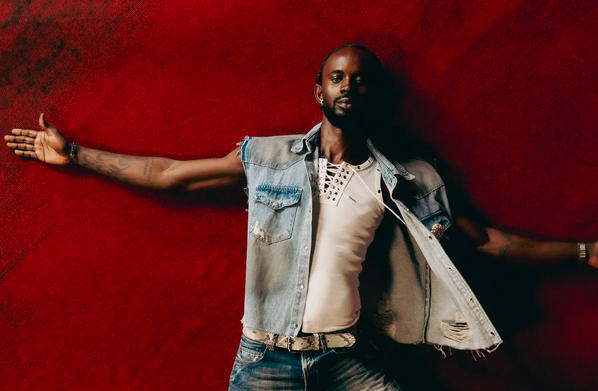
He admits that in his adult years this topic “has become one of the greatest discussions in my bedroom mirror and with this project, I have allowed you a glimpse of it.” Remarkably, despite creating this song together, the artistes did so from different parts of the world. They did not meet until the filming of the official music video. The reality TV-inspired video, which drops on October 15th, further celebrates the undeniable musical chemistry between West Africa and the Caribbean – regions whose cultural ties continue to inspire some of the world’s most exciting sounds.
Full Blown’s involvement in this project further supports their continued exploration of themes related to love and relationships. “This project felt natural and fits our vibe and style perfectly,” the brothers expressed cohesively.
Hailing from the twin-island Republic of Trinidad & Tobago, where Soca music is the dominant genre, a big part of their dream for the genre has always been to carry the sound of Soca music to the corners of the globe, and to collaborate and share their particular vibe with artistes from different cultures. “This project is another step forward for Full Blown. We’re keeping our
dream alive,” said the duo.
As Afrobeats continues its global rise and Caribbean music expands its international reach, ‘Love Again’ reflects a broader movement bringing African and Caribbean artistes closer together. Rather than borrowing from one another, the record celebrates a shared musical lineage while pointing toward an increasingly connected future.
‘Love Again’ is one of 6 tracks featured on his EP titled SUN SHERIF, which is set to follow the success of his second studio album.
Around the World
Rihanna’s Net Worth Drops 29% According to Forbes.

According to Forbes, Rihanna’s net worth has taken a significant hit, dropping by 29% since 2024. The singer-turned-business mogul, who previously reached billionaire status with an estimated fortune of $1.4 billion, now holds an estimated $1 billion. Her fall in valuation was one of the most notable shifts in Forbes’ 2025 list of America’s Richest Self-Made Women, where she now ranks at No. 35.
The outlet notes that the decline is attributed largely to stalled growth across her business empire. Although the Fenty Beauty expanded into China last year, LVMH cited a “challenging environment” that has affected global sales.
Adding to the turbulence, the CEO of Rihanna’s lingerie brand, Savage X Fenty, stepped down in August 2024 to take over at Victoria’s Secret. The departure marked a leadership shakeup during a period when profits were already under pressure.
A companion article by Forbes explored broader structural issues impacting celebrity-run brands, especially in fashion and beauty, where evolving market trends and consumer fatigue have led to tighter margins—even for mega-celebrities like Rihanna.
NEW BRIDAL LINGERIE COLLECTION LAUNCHED

The 37-year-old superstar remains focused. Savage X Fenty launched a new Bridal Collection in April 2025, and Fenty Beauty brought back its cult-favorite Body Lava luminizers just in time for summer. The brand also introduced a mascara line and a Roblox-based digital experience to expand its reach.
Beyond business, Rihanna made headlines with a personal milestone: the announcement of her third pregnancy at the 2025 Met Gala. Appearing on the red carpet with longtime partner, the singer revealed her baby bump, engaging the world, particular across social media.
THE LOSS OF HER FATHER

Tragically, Rihanna has also faced personal loss this year. Her father, Ronald Fenty, passed away recently. While she has not commented publicly, sources close to the family say the two had maintained a complicated but evolving relationship in recent years.
Despite the financial setback and personal challenges, Barbados born Rihanna continues to shape her legacy—both as a cultural icon and an entrepreneur, navigating a shifting business landscape and keeping true fans engrossed in all that she becomes involved in.